Understanding the Business Lifecycle: From Idea to Sustainability
In the world of business, a company's journey is never linear. Every business has its own life cycle, from the first idea to the moment it reaches…
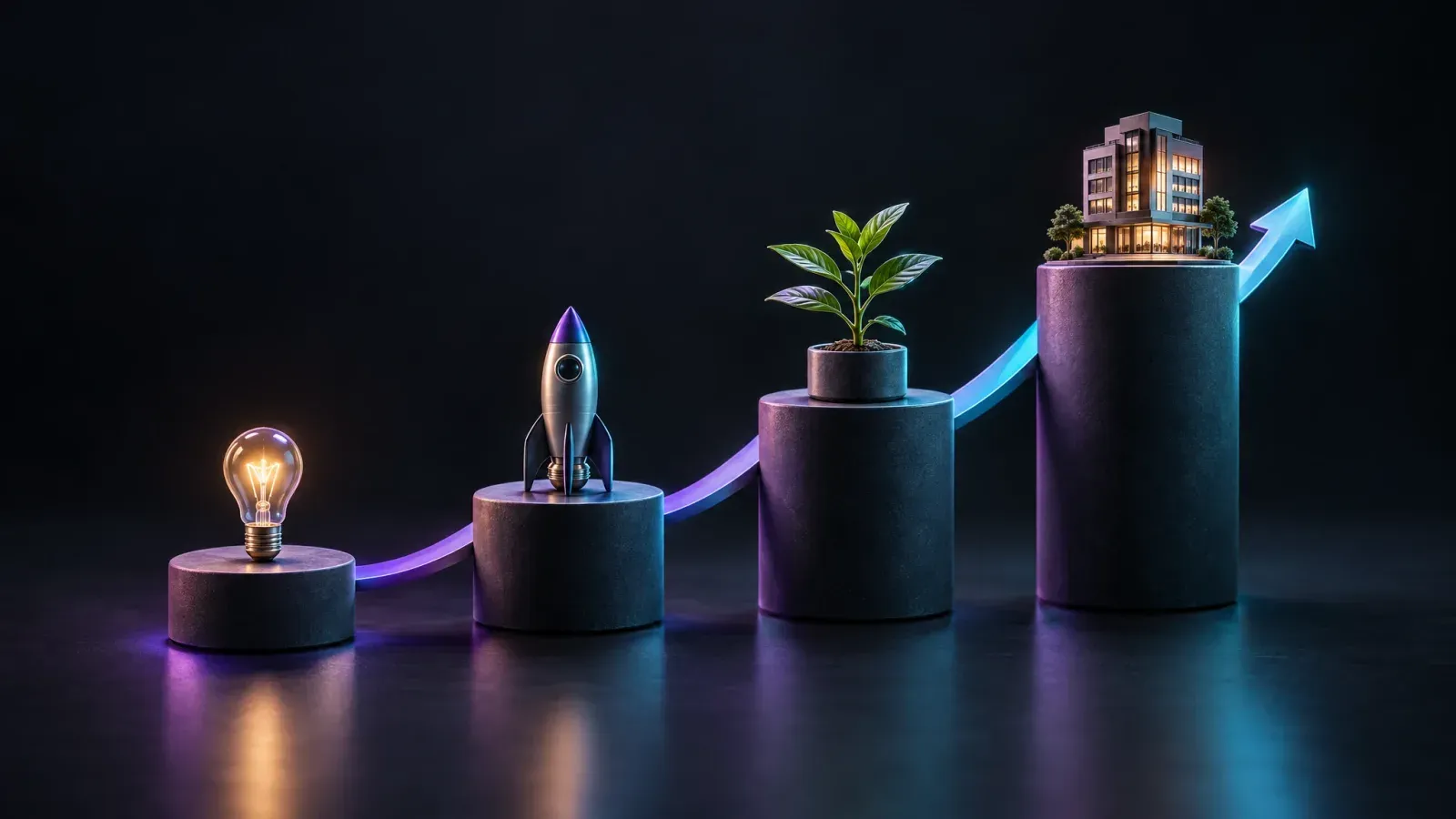
In the world of business, a company’s journey is never linear. Every business has its own life cycle, from the first idea to the moment it reaches the peak of success or has to face closing down. Let’s walk through the business life cycle together, so we can understand the critical phases a company goes through.
Phase 1: Idea and Development
Every business starts with an idea. Whether it is a new product, an innovative service, or a solution to an existing problem, this idea is the foundation of everything that will be built. At this stage, founders carry out market research to understand what consumers need and to decide whether the idea is worth bringing to life.
Data shows that around 75% of startups fail within their first five years, often because they do not understand the market well enough. That is why validating an idea through surveys or product trials is essential before going any further.
Phase 2: Launch
Once the idea has been developed and tested, it is time to launch the business. This is the phase where the product or service is introduced to the public. Effective marketing is crucial at this stage to attract consumer attention. Many new businesses also struggle to manage their finances and their people at this point.
A real-world example is a technology company launching a new app. These companies often use aggressive digital marketing strategies to reach potential users and gather feedback for future improvements.
Phase 3: Growth
If the launch goes well, the business enters the growth phase. At this stage, sales rise and the company starts to gain recognition in the market. But growth brings new challenges too, such as rising demand that calls for more manpower and resources.
Statistics show that around 20% of the businesses that make it through the launch phase can grow substantially over the next two to three years. That usually takes continuous innovation and the ability to adapt to changing market conditions.
Phase 4: Maturity
After reaching peak growth, a business moves into the maturity phase. Here, sales growth may begin to slow and competition gets fiercer. Companies that do well at this stage usually have a strategy for holding on to market share, such as diversifying products or expanding into new markets.
At this stage, a company has to keep innovating so it does not get stuck in stagnation. Many businesses choose to reinvest their profits into research and development or into improving the customer experience.
Phase 5: Decline or Renewal
Not every business can sustain itself. The decline phase can be triggered by various factors, such as shifting trends, the emergence of new competitors, or changes in consumer behavior. But this is not the end; many companies manage to renew themselves by changing their strategy, adjusting their products, or even overhauling their organizational structure.
One success story is a technology company that shifted its focus from an old product to a new, trending technology and managed to revive its business.
Conclusion
The business life cycle is a winding journey, from idea to sustainability. Understanding each phase in this cycle can help entrepreneurs plan the right strategy and avoid the mistakes that are commonly made.
Whether you are starting a new business or already have experience in the business world, do not hesitate to explore each phase of your business life cycle in more depth.
First published on blog.beringinhub.com